
Scalenut vs Semrush: a detailed 2000+ word comparison of features, use cases, pricing philosophy, and SEO workflows to help bloggers and marketers choose the right platform.
Scalenut vs Semrush is not a simple head-to-head. This in-depth Part 1 comparison explores positioning, core features, SEO philosophy, and real-world use cases to help you decide which platform aligns with your content and marketing strategy.
Scalenut vs Semrush Pricing & Features Compared
The debate around Scalenut vs Semrush has become increasingly common among bloggers, SEO professionals, and digital marketers—and for good reason. Both platforms promise better rankings, stronger content, and clearer SEO insights. But they approach the problem from fundamentally different angles.
If you’ve ever wondered whether you should invest in an AI-first content and SEO platform or a full-scale enterprise SEO toolkit, this comparison is for you.
In this multi-part series, we’ll focus on strategy, positioning, and core capabilities rather than surface-level feature lists. By the end, you’ll understand:
-
What Scalenut is designed to solve
-
What Semrush is built to dominate
-
Why Scalenut vs Semrush is not a direct replacement decision
-
Which platform fits different stages of SEO maturity
Later parts will dive into pricing, AI content quality, keyword accuracy, SERP analysis, and real-world workflows.
Understanding the Core Philosophy Behind Scalenut vs Semrush
Before comparing tools, you must understand intent. Most bad SaaS decisions happen because users compare features without understanding who the tool was built for.
What Problem Does Scalenut Solve?
Scalenut is designed primarily for content-led SEO growth. Its core promise is simple:
Help users research, create, optimize, and publish SEO-ready content faster using AI.
Scalenut is not trying to replace every SEO tool on the market. Instead, it focuses on:
-
Topic discovery
-
Keyword clustering
-
AI-assisted content creation
-
On-page optimization using NLP and SERP analysis
The platform is especially popular among:
-
Bloggers
-
Affiliate marketers
-
Niche site builders
-
Content teams producing SEO articles at scale
In the Scalenut vs Semrush discussion, Scalenut represents speed, simplicity, and AI-first execution.
What Problem Does Semrush Solve?
Semrush is an enterprise-grade digital marketing suite. Its mission is much broader:
Provide data intelligence for SEO, PPC, content, competitive analysis, PR, and social media.
Semrush was built for:
-
SEO agencies
-
In-house marketing teams
-
Enterprise websites
-
Brands managing multiple channels and markets
When comparing Scalenut vs Semrush, Semrush represents depth, data accuracy, and strategic oversight.
Scalenut Pricing Explained in Detail
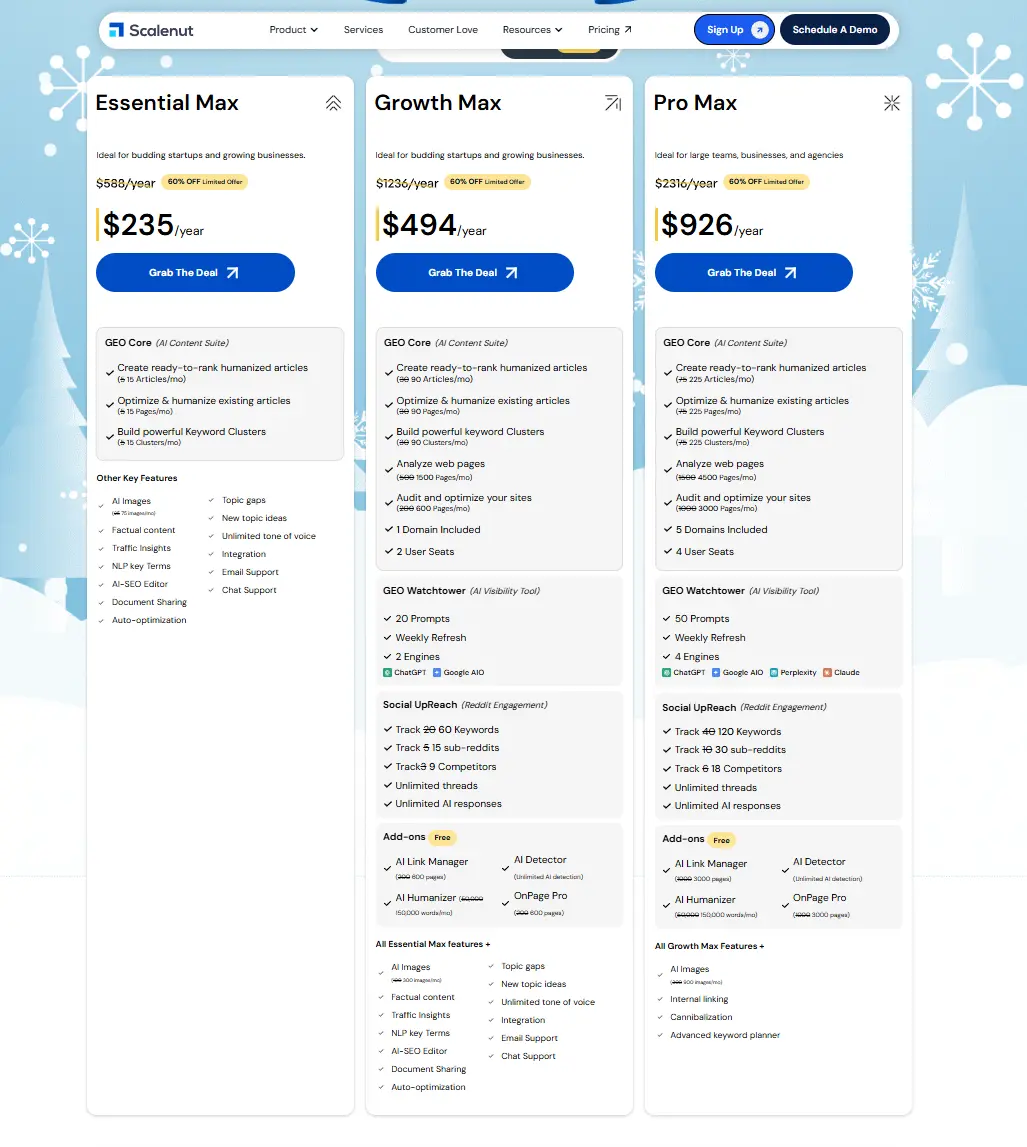
When analyzing scalenut vs semrush pricing, Scalenut stands out as the more affordable and predictable option.
Scalenut Pricing Plans (2026)
Scalenut generally offers three main plans:
1. Essential Plan
This plan is designed for solo bloggers and beginners who want to start ranking content without spending a lot.
You get AI writing credits, basic keyword research, content optimization, and limited topic clustering. For beginners, this plan provides a low-cost entry into SEO automation without overwhelming complexity.
2. Growth Plan (Most Popular)
The Growth plan is where Scalenut truly shines in the scalenut vs semrush pricing comparison. It includes full access to topic clusters, NLP optimization, advanced AI content creation, internal linking suggestions, and SERP analysis.
This plan is perfect for affiliate marketers, niche site builders, and small teams who want to scale content efficiently.
3. Pro Plan
The Pro plan is designed for agencies and serious content teams. It increases usage limits, adds team collaboration features, and supports higher publishing velocity.
From a pricing perspective, Scalenut remains significantly cheaper than Semrush even at its highest tier.
Scalenut vs Semrush: Platform Scope and Breadth
One of the most important differences in the Scalenut vs Semrush debate is platform scope.
Scalenut’s Focused SEO Stack
Scalenut intentionally limits its scope to areas where AI provides the biggest leverage:
-
Keyword research (content-focused)
-
Topic clusters and pillar planning
-
SERP competitor analysis
-
AI writing with SEO scoring
-
On-page optimization guidance
This focus allows Scalenut to streamline workflows. A typical Scalenut user can:
-
Discover a keyword
-
Analyze competitors
-
Generate an optimized outline
-
Write AI-assisted content
-
Optimize for NLP terms
-
Publish—all within one interface
In the Scalenut vs Semrush comparison, Scalenut wins on workflow efficiency for content creation.
Semrush’s All-in-One Marketing Ecosystem
Semrush, by contrast, offers over 50 tools across multiple disciplines:
-
Keyword research (SEO & PPC)
-
Backlink analysis
-
Site audits
-
Rank tracking
-
Content marketing tools
-
Advertising research
-
Social media management
-
Brand monitoring
While powerful, this breadth introduces complexity. New users often feel overwhelmed.
In the Scalenut vs Semrush discussion, Semrush wins on capability depth, but loses on ease of onboarding.
Keyword Research: Intent vs Volume
Keyword research is often the first feature users compare when evaluating Scalenut vs Semrush.
How Scalenut Approaches Keyword Research
Scalenut’s keyword research is intent-driven rather than volume-driven.
Instead of overwhelming users with tens of thousands of keywords, Scalenut focuses on:
-
Semantic relevance
-
Content clusters
-
Supporting subtopics
-
SERP-based competitor terms
Its goal is not to find every keyword—but to identify the best keywords to build topical authority.
This approach is ideal for:
-
Blogs
-
Affiliate content
-
Long-form informational articles
-
Topical niche domination
In the Scalenut vs Semrush comparison, Scalenut favors content strategy over raw data.
How Semrush Approaches Keyword Research
Semrush offers one of the largest keyword databases in the industry.
Key strengths include:
-
Accurate search volume estimates
-
Keyword difficulty metrics
-
CPC and commercial intent data
-
SERP features tracking
-
International keyword databases
Semrush excels when:
-
Planning large SEO campaigns
-
Evaluating keyword ROI
-
Managing paid search alongside SEO
-
Analyzing competitors at scale
In Scalenut vs Semrush, Semrush clearly dominates data granularity and accuracy.
Content Creation and Optimization Capabilities
This is where the Scalenut vs Semrush comparison becomes most interesting.
Scalenut’s AI-First Content Engine
Scalenut was built in the era of AI-driven SEO. Its content tools are deeply integrated with SERP analysis.
Key features include:
-
AI-generated outlines based on top-ranking pages
-
NLP keyword recommendations
-
Real-time SEO scoring
-
AI writing for sections, intros, FAQs, and conclusions
-
Content optimization suggestions tied directly to competitors
For content creators, Scalenut functions as:
-
Research assistant
-
SEO strategist
-
AI writer
-
On-page optimizer
In Scalenut vs Semrush, Scalenut is clearly superior for hands-on content production.
Semrush’s Content Tools: Strategic, Not Generative
Semrush also offers content tools—but with a different philosophy.
Semrush focuses on:
-
Content audits
-
SEO content templates
-
Topic research
-
Content performance tracking
While Semrush does include AI writing features, they are supporting tools, not the platform’s core strength.
Semrush assumes:
-
You already have writers
-
You need performance insights
-
You care about content ROI at scale
In the Scalenut vs Semrush debate, Semrush is better for content governance, not creation.
SERP Analysis: Automation vs Manual Control
SERP analysis is critical for ranking content—and another area where Scalenut vs Semrush diverge.
Scalenut’s Automated SERP Insights
Scalenut automatically analyzes:
-
Top-ranking competitors
-
Word count averages
-
Heading structures
-
Common NLP phrases
-
Content gaps
These insights are baked directly into the editor. Users don’t need to jump between tools.
This automation is perfect for:
-
Solo bloggers
-
Small teams
-
High-volume content publishing
In Scalenut vs Semrush, Scalenut offers speed and simplicity.
Semrush’s Deep SERP Diagnostics
Semrush allows granular SERP analysis:
-
URL-level ranking changes
-
SERP feature ownership
-
Volatility tracking
-
Historical SERP comparisons
This depth is invaluable for:
-
Competitive niches
-
Enterprise SEO
-
Algorithm update analysis
In the Scalenut vs Semrush comparison, Semrush offers control and precision.
Learning Curve and Usability
Tool adoption often matters more than tool power.
Scalenut: Built for Fast Adoption
Scalenut’s interface is:
-
Clean
-
Guided
-
Minimalistic
Most users can publish optimized content within their first hour.
This makes Scalenut ideal for:
-
Beginners
-
Non-technical marketers
-
Writers transitioning into SEO
In Scalenut vs Semrush, Scalenut wins on usability and speed.
Semrush: Built for Power Users
Semrush has a steeper learning curve. However, that complexity unlocks advanced capabilities.
It’s best suited for:
-
SEO professionals
-
Agencies
-
Data-driven marketers
In the Scalenut vs Semrush discussion, Semrush rewards expertise and experience.
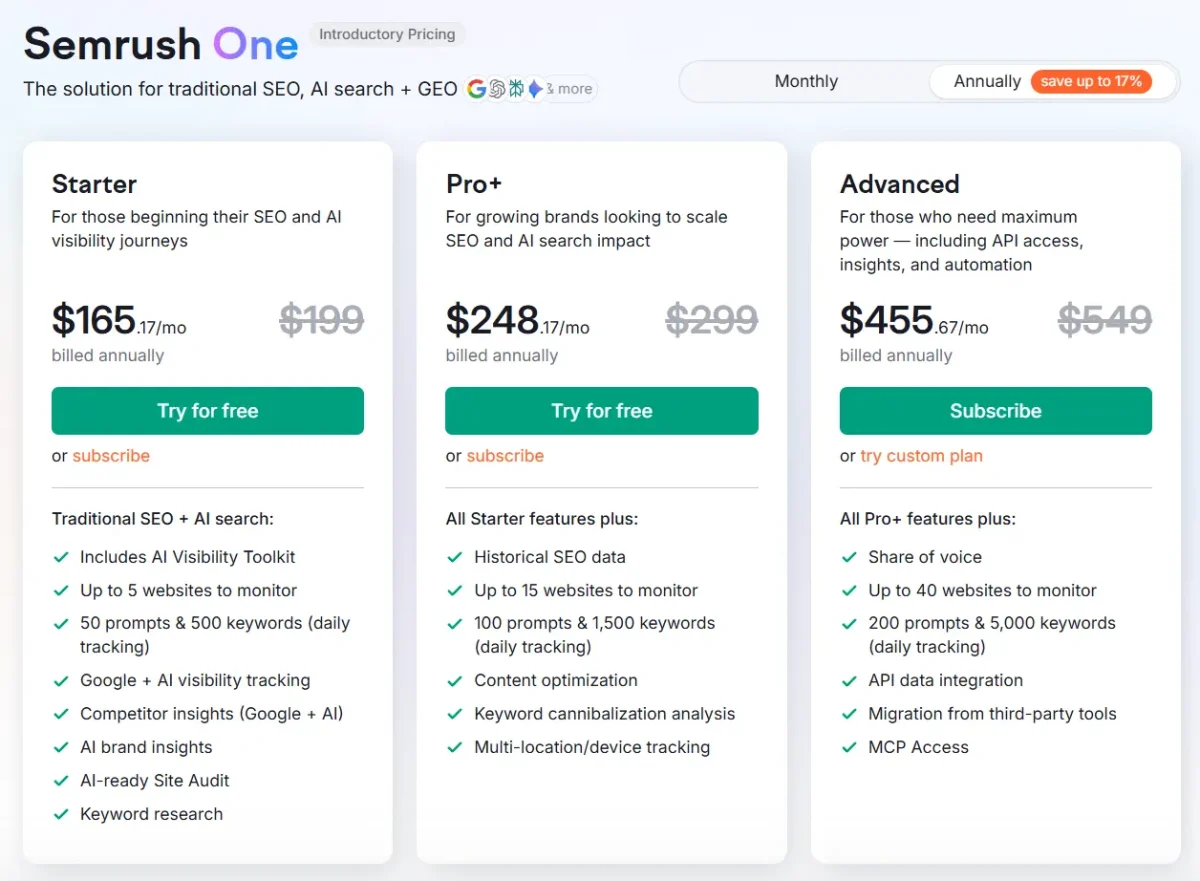
Semrush Pricing Explained in Detail
Now let’s break down Semrush pricing, which plays a major role in the scalenut vs semrush pricing debate.
Semrush Pricing Plans (2026)
Semrush pricing is premium and reflects its enterprise-grade data infrastructure.
1. Pro Plan
The Pro plan is meant for freelancers and small site owners. It includes keyword research, competitor analysis, site audits, and backlink tracking—but with strict daily limits.
While powerful, many users quickly outgrow this plan due to usage caps.
2. Guru Plan
The Guru plan is targeted at content teams and growing businesses. It unlocks historical data, content marketing tools, and higher limits.
This plan is often compared directly with Scalenut’s Growth plan in scalenut vs semrush pricing, but it is much more expensive.
3. Business Plan
The Business plan is built for agencies and enterprises. It offers white-label reports, API access, and massive limits—but at a very high monthly cost.
For many bloggers, this plan is overkill.
Scalenut vs Semrush: Philosophy and Core Design Differences
Before comparing advanced features, it’s important to understand how each tool was built to be used.
Scalenut’s Philosophy: AI-First SEO Execution
Scalenut is built around one idea:
SEO should be faster, simpler, and content-centric.
Its workflows assume you want to:
-
Find keywords quickly
-
Understand search intent instantly
-
Create optimized content in one interface
-
Publish faster without juggling multiple tools
Scalenut removes friction by blending:
-
Keyword research
-
NLP-based optimization
-
AI writing
-
Content briefs
-
On-page scoring
into a single guided workflow.
This makes Scalenut ideal for:
-
Bloggers
-
Niche site builders
-
Lean content teams
-
Founders doing their own SEO
Semrush’s Philosophy: Data Depth and Market Intelligence
Semrush is designed for competitive dominance at scale.
Its core assumption:
SEO is part of a much larger ecosystem that includes:
-
Paid ads
-
Competitive intelligence
-
Brand monitoring
-
Technical SEO
-
PR and link building
Semrush prioritizes:
-
Massive datasets
-
Granular reporting
-
Multi-channel insights
-
Agency-level workflows
This makes Semrush ideal for:
-
Agencies
-
In-house SEO teams
-
Enterprise brands
-
Advanced marketers managing multiple sites

Advanced Keyword Strategy: Scalenut vs Semrush
Scalenut’s Keyword Clustering Advantage
Scalenut excels at topical authority building.
Instead of treating keywords individually, Scalenut focuses on:
-
Pillar keywords
-
Supporting clusters
-
Semantic relevance
Its Topic Cluster feature:
-
Groups related keywords automatically
-
Shows content gaps
-
Helps you plan entire content silos
For bloggers and niche sites, this is powerful because:
-
You stop chasing random keywords
-
You build authority faster
-
Internal linking becomes obvious
Scalenut’s approach aligns perfectly with Google’s emphasis on:
-
Topical depth
-
Semantic SEO
-
Search intent satisfaction
Semrush’s Keyword Intelligence Depth
Semrush offers:
-
One of the largest keyword databases in the industry
-
Country-specific data across dozens of regions
-
SERP feature tracking
-
Keyword difficulty broken down by authority metrics
Advanced users love Semrush because:
-
You can reverse-engineer competitors
-
Analyze entire industries
-
Identify seasonal trends
-
Validate keywords with historical data
However, this depth comes at a cost:
-
Steeper learning curve
-
More manual analysis
-
Slower execution for solo creators
Scalenut’s AI-Powered Content Engine
Scalenut’s content editor is where it truly shines.
Key strengths:
-
NLP terms pulled directly from top-ranking pages
-
Real-time SEO scoring
-
AI-generated outlines and drafts
-
Automatic FAQ suggestions
The workflow looks like this:
-
Choose a keyword
-
Analyze SERP intent
-
Generate an optimized outline
-
Write or refine content with live SEO feedback
This dramatically reduces:
-
Research time
-
Outline creation time
-
Optimization guesswork
For bloggers publishing 10–50 articles per month, Scalenut can cut content production time in half.
Semrush’s SEO Content Template & Writing Assistant
Semrush also offers content optimization, but it’s more modular.
Tools include:
-
SEO Content Template
-
SEO Writing Assistant
-
Topic Research
Strengths:
-
Highly accurate keyword recommendations
-
Strong readability and tone analysis
-
Integration with Google Docs and WordPress
Limitations:
-
No native AI writing at Scalenut’s level
-
Requires switching between tools
-
More manual execution
Semrush’s approach favors precision over speed, making it better for:
-
High-stakes landing pages
-
Brand-sensitive content
-
Enterprise editorial workflows
Technical SEO and Site Audits
This is where the gap widens.
Semrush’s Technical SEO Dominance
Semrush is unmatched in technical SEO.
Its Site Audit tool covers:
-
Crawlability
-
Indexation issues
-
Core Web Vitals
-
HTTPS and security
-
Schema markup
-
Internal linking
For large sites, this is essential.
Semrush also provides:
-
Log file analysis
-
Advanced reporting
-
Automated alerts
If technical SEO is a priority, Semrush is not optional—it’s mandatory.
Scalenut’s Technical SEO Limitations
Scalenut is not a technical SEO tool.
Its focus remains on:
-
Content
-
Keywords
-
On-page optimization
You will still need:
-
Google Search Console
-
A crawler like Screaming Frog
-
Or Semrush/Ahrefs
This isn’t a flaw—it’s a design choice.
Scalenut assumes:
“You care more about publishing great content than fixing server errors.”
Backlink Analysis and Off-Page SEO
Semrush’s Backlink Ecosystem
Semrush excels in off-page SEO.
Features include:
-
Backlink audits
-
Toxic link detection
-
Link gap analysis
-
Outreach tracking
Agencies rely on Semrush to:
-
Manage link campaigns
-
Monitor competitors
-
Maintain link health
Scalenut’s Off-Page Focus
Scalenut does not compete here.
It provides:
-
Minimal backlink insights
-
No outreach tools
Scalenut’s philosophy:
“Earn links through content quality.”
For many bloggers, this is enough—but agencies will need Semrush.
Pricing, ROI, and Scalability
Scalenut Pricing Value
Scalenut is significantly more affordable.
What you get for the price:
-
AI writing
-
Keyword research
-
Topic clustering
-
Content optimization
For solo creators, the ROI is excellent.
Semrush Pricing Reality
Semrush is expensive—but justified.
You’re paying for:
-
Massive datasets
-
Enterprise-level tooling
-
Multi-user workflows
For agencies and large teams, Semrush pays for itself.
Real-World Use Cases
Bloggers & Niche Site Builders
Winner: Scalenut
Faster publishing, easier workflows, lower cost.
Agencies & Enterprises
Winner: Semrush
Data depth, reporting, scalability.
Hybrid Approach
Many professionals use both:
-
Scalenut for content creation
-
Semrush for audits, backlinks, and competitive research
Scalenut vs Semrush: Final Verdict
There is no universal winner.
Choose Scalenut if:
-
Content is your growth engine
-
Speed matters
-
You want AI-assisted SEO execution
Choose Semrush if:
-
You manage multiple sites
-
Technical SEO is critical
-
Competitive intelligence drives strategy
For many advanced marketers, the smartest move is strategic combination, not replacement.
Who Should Choose Scalenut ?
Choose Scalenut if:
-
Content is your primary growth channel
-
You want AI-assisted writing and optimization
-
You value speed over granular data
-
You’re building topical authority through blogging
Who Should Choose Semrush ?
Choose Semrush if:
-
You manage SEO at scale
-
You need backlink, PPC, and competitor intelligence
-
You work with clients or large teams
-
You require enterprise-level data accuracy
Conclusion: Scalenut vs Semrush
The Scalenut vs Semrush debate doesn’t end with a simple winner, because these platforms are built to solve different stages of the SEO journey.
Scalenut is purpose-built for speed, clarity, and execution. It excels where most bloggers and lean teams struggle the most: turning keywords into search-intent–optimized content at scale. Its AI-driven workflows, topic clustering, and real-time optimization make it a powerful growth engine for creators who rely on publishing velocity and topical authority to win organic traffic.
Semrush, on the other hand, is an SEO command center. It’s designed for marketers who need deep data, competitive intelligence, technical audits, backlink analysis, and cross-channel visibility. For agencies, enterprises, and advanced in-house teams, Semrush is not just a tool—it’s infrastructure.